ME-QR / ME-QR vs Beaconstac
When evaluating QR code platforms, the market offers several established players, each with distinct approaches and capabilities. ME-QR and Beaconstac represent two philosophies: ME-QR positions itself as a comprehensive, unified ecosystem designed from the ground up for diverse business applications, while Beaconstac functions as a bridge platform that handles core QR code functionality with selective enhancement through partner integrations. Understanding these differences helps you select the right tool for your specific requirements.
Both platforms operate in the competitive QR code generator space, trusted by organizations ranging from small businesses to enterprises. However, their underlying architectures, feature availability, and scaling capabilities differ significantly. This detailed analysis examines each platform across crucial dimensions—functionality, customization, analytics, business readiness, and cost structure—providing the insight necessary to make an informed decision.
| Free service availability after the trial period |
|
|
| Free plan duration (days) | Unlimited | Unlimited |
| Annual cost ($) | $69–$99 (annual plan discount) |
|
| Monthly cost ($) | $9–$15 |
|
| Static code functionality after the trial period | Unlimited | Unlimited |
| Dynamic code functionality after the trial period | Code remains active |
|
| QR code generation limit (free period) | Unlimited | Unlimited |
| QR code types available (paid version) | 46 |
|
| QR code types available (free version) | 46 | 14 |
| Dynamic QR code support |
|
Via redirect only |
| QR code scan limit (free version) | Unlimited | Unlimited |
| QR code appearance customization (paid version) |
|
Via redirect only |
| QR code appearance customization (free version) |
|
|
| QR code analytics (paid version) |
|
Via redirect only |
| QR code analytics (free version) |
|
|
| Integration with Google Analytics |
|
|
| QR code domain customization |
|
Via redirect only |
| Import of QR codes from other services |
|
|
| Edit QR code content (paid version) |
|
Via redirect only |
| Edit QR code content (free version) |
|
|
| Automatic updates for dynamic QR codes |
|
Via redirect only |
| Bulk QR code generation and upload |
|
Via redirect only |
| Multi-language support (number of languages) | 32 | 9 |
| Customer support availability |
|
Via redirect only |
| Custom frame design library |
|
Via redirect only |
| Creation of content landing pages |
|
|
| Multi-user account access |
|
|
The fundamental distinction between these platforms stems from their design philosophy. ME-QR operates as a fully integrated, single-platform solution where every feature exists within the same ecosystem. Users access QR code generation, management, analytics, customization, and collaboration tools all from one dashboard with consistent interfaces and unified data.
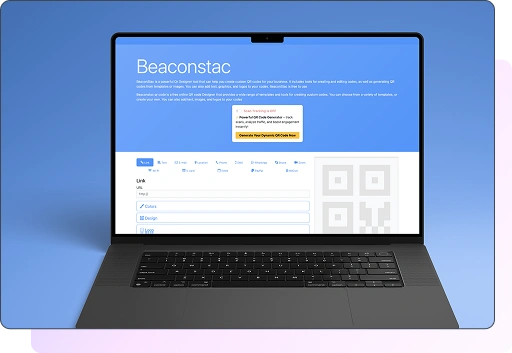
Beaconstac takes a different approach. The platform provides core QR code functionality, particularly static code creation, customization, and analytics.However, when users require advanced capabilities—particularly certain enterprise features, enhanced analytics, or specialized functions—Beaconstac redirects them to qrcodemonkey.net for execution. This integration means some functionalities like advanced dynamic features, bulk operations at scale, and certain analytics capabilities operate through qrcodemonkey.net rather than directly within Beaconstac itself.
For users, this architectural difference creates important implications about workflow continuity, data management, and the learning curve required to work effectively across platforms.
To understand the practical differences between these platforms, examining what each genuinely provides requires looking beyond marketing claims to actual functionality.
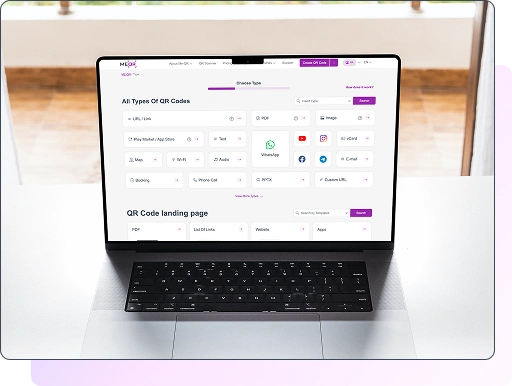
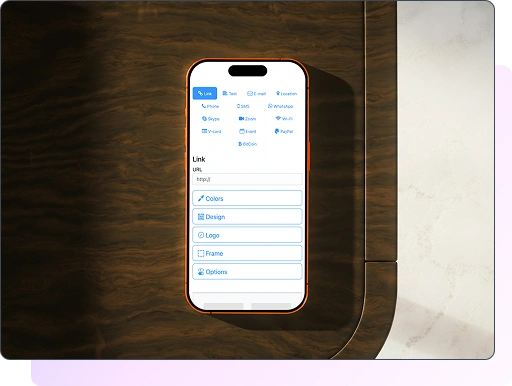
ME-QR supports 46 distinct QR code types across its entire platform, regardless of which pricing tier users select. This includes social media integration, file sharing, communication tools, payment solutions, business applications, and specialized formats. Every type remains accessible from the same interface without tier-based restrictions or external redirects.
The platform enables users to create URLs, vCards, WiFi credentials, event information, WhatsApp messages, Telegram links, PDF sharing, image galleries, video hosting, payment codes, calendar entries, appointment scheduling, feedback forms, and dozens of other specialized formats. This comprehensiveness means users rarely encounter situations where their specific use case falls outside the platform’s capabilities.
Beaconstac supports 14 QR code types through its primary interface. The types available include basic URL links, vCard contact information, WiFi credentials, email addresses, phone numbers, and other fundamental formats. For many standard business applications, this selection proves adequate.
However, when users require more specialized QR code types or advanced functionality, they encounter redirection to qrcodemonkey.net. This occurs for certain advanced dynamic features, sophisticated bulk operations, or specialized use cases the Beaconstac interface doesn’t directly handle. Users must create a separate account, learn a different interface, and manage their codes across two platforms.
Both platforms support QR code creation, but their approaches to dynamic functionality—codes editable after publication—differ fundamentally.
ME-QR enables dynamic QR code creation across all pricing tiers, including the free plan. Users can create a dynamic code, publish it, and then edit the destination URL, redirect behavior, or content type completely changing the user experience without modifying the actual QR code image.
This capability provides enormous practical value. Print marketing materials, distribute QR codes across physical locations, or publish codes in magazines—and then update destinations in real-time as campaigns evolve, promotions change, or business needs shift. The codes remain constant while their function adapts to current requirements.
ME-QR handles dynamic code management internally. Create codes, edit them, monitor scans, and adjust behavior all within the same unified dashboard. No redirects, no secondary platforms, no account fragmentation.
Beaconstac’s strength centers on static QR codes—those where the destination permanently encodes into the visual pattern during creation. Static codes work excellently for permanent applications where the destination never changes: printing on physical products, embedding in magazines, or creating lasting marketing collateral.
However, if you require dynamic functionality—the ability to edit your QR code’s destination after publication—Beaconstac redirects you to qrcodemonkey.net. This means dynamic QR code creation doesn’t happen within Beaconstac’s interface. Instead, you must create a separate qrcodemonkey.net account, access the qrcodemonkey.net platform, and manage dynamic codes there.
For users prioritizing static codes with occasional dynamic needs, this redirection adds friction. For organizations building dynamic code strategies, this architecture fundamentally limits Beaconstac’s utility as a standalone platform.
Visual customization directly impacts how QR codes perform in real-world applications. Codes aligned with brand identity not only scan more reliably but also communicate professionalism and build brand recognition.
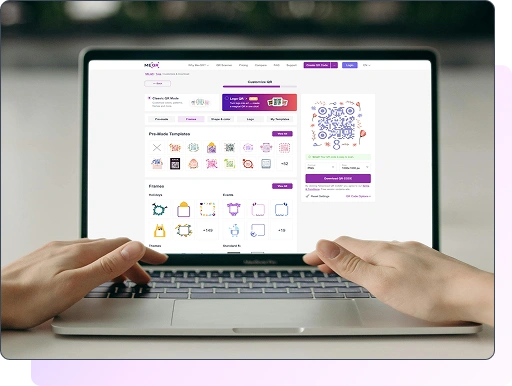
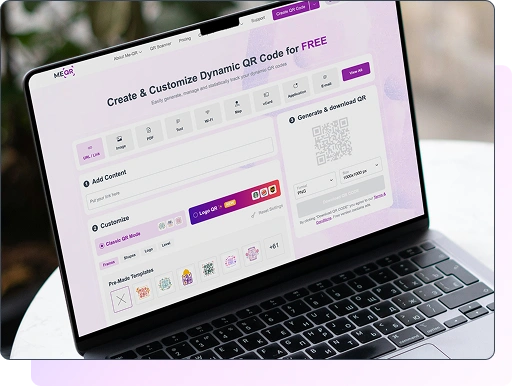
ME-QR provides comprehensive customization options across all plans. Users can select any color from a full palette, matching specific brand guidelines with precision. Upload company logos that integrate into the QR code design while maintaining scannability. Choose from dozens of frame styles with custom call-to-action messaging like “Scan Me,” “Learn More,” or branded variants.
The platform offers artistic templates, shape variations, and pattern customizations that transform generic QR codes into branded assets reflecting company identity. Advanced users can access professional design elements including custom frame libraries and pre-designed templates accelerating visual development.
Importantly, all customization maintains QR code functionality. Error correction technology ensures that even elaborately customized codes remain consistently scannable across different devices, lighting conditions, and printing methods.
Beaconstac provides customization options including color selection, logo integration, and frame additions. These capabilities work well for creating visually appealing codes that align with basic branding requirements.
However, particularly specialized frames, extensive artistic designs, and certain premium design elements—appear available through qrcodemonkey.net rather than directly in Beaconstac. This means users seeking sophisticated design customization may need to navigate between platforms to access the complete range of options.
Basic customization (colors, simple logos, standard frames) works directly in Beaconstac, addressing fundamental branding needs. More extensive design requirements redirect users to the qrcodemonkey.net interface.
Data intelligence distinguishes modern QR code platforms from basic generators. Understanding scan patterns, user behavior, geographic distribution, and device types transforms QR codes from static links into strategic marketing assets.
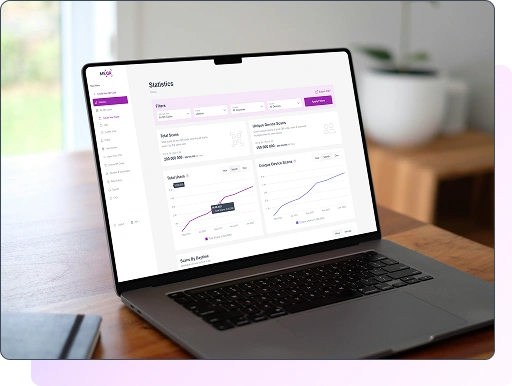
ME-QR includes sophisticated analytics capabilities even in its free tier. The platform tracks total scans, distinguishes between unique and repeat scans, captures geographic data identifying scan locations, logs device and operating system information, records precise timestamps, and maintains three years of historical data in paid plans.
Google Analytics integration enables seamless incorporation of QR code performance data into broader marketing intelligence. Real-time scan notifications alert users immediately when codes are accessed, enabling rapid response to campaign performance or technical issues.
The analytics dashboard provides visualization tools, custom reporting capabilities, and data export functionality allowing integration with business intelligence systems. Users gain complete understanding of QR code performance without navigating external platforms or manual tracking.
Beaconstac provides analytics tracking including scan counts, geographic data, device information, and basic reporting. For most business applications, these analytics prove adequate, enabling campaign performance evaluation and user behavior understanding.
However, particularly detailed scan statistics, advanced segmentation, and specialized reporting—operate through qrcodemonkey.net integration. This means users seeking comprehensive analytics depth may need accounts across both platforms to access the complete analytical picture.

Basic analytics (scan counts, location data, device type) function directly in Beaconstac. Advanced analytics requirements may necessitate qrcodemonkey.net access, fragmenting analytics across platforms.
Professional business applications demand more than basic code generation. APIs, bulk operations, team management, security features, and automation integration become essential for scaling.

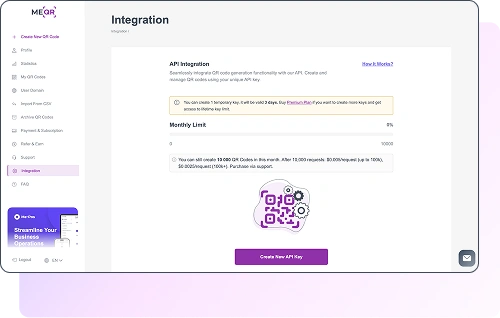
ME-QR provides RESTful API access enabling programmatic QR code generation, automated management, and seamless integration with business systems, CRM platforms, and marketing automation tools. Organizations can build custom workflows, automate high-volume code generation, and incorporate QR codes directly into existing applications.
The platform supports bulk creation of hundreds or thousands of QR codes simultaneously through spreadsheet uploads or API calls, perfect for product lines, event ticketing, or large-scale campaigns. Multi-user account access with role-based permissions enables efficient team collaboration.

Password protection for sensitive QR codes, scheduled activation and deactivation, custom domain configuration, and enterprise-grade security features address professional requirements. Custom landing pages branded to match your organization enable sophisticated user experiences without separate web development.

Real-time scan notifications, team communication features, and comprehensive project management tools help organizations coordinate QR code campaigns across departments.
Beaconstac provides business capabilities including basic API access for developers, allowing some level of integration with business systems. The platform supports team collaboration with multi-user account access and permission management.
However, examination of feature availability shows certain advanced business operations—particularly large-scale bulk generation, specialized automation, and certain API functionalities—route through qrcodemonkey.net. This means while basic business features work in Beaconstac, enterprises attempting complex automation or high-volume operations may require qrcodemonkey.net integration.
Organizations can use Beaconstac for core QR code business needs (team management, basic analytics, straightforward campaign tracking). More sophisticated enterprise requirements necessitate expanding to qrcodemonkey.net, introducing platform fragmentation.
Understanding true costs requires examining what each tier genuinely includes and identifying any hidden expenses or redirect-triggered costs.
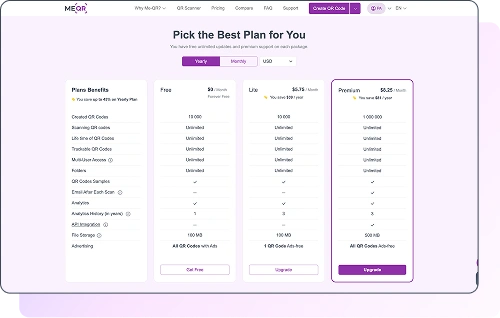
ME-QR offers straightforward pricing tiers:
This pricing structure provides genuine value at each tier. Even the free version delivers dynamic codes and analytics—capabilities many competitors charge premium rates for. Paid plans unlock business features proportional to their cost.
Beaconstac presents free access to core QR code functionality. The platform offers free static code generation without limitations and free dynamic code capabilities with some restrictions.
However, numerous features showing qrcodemonkey.net redirection. This architectural design means accessing certain functions requires either upgrading within Beaconstac or transitioning to qrcodemonkey.net, where separate pricing applies.
For simple static codes and basic dynamic functionality, Beaconstac provides free access. For advanced features users encounter either Beaconstac upgrade costs or qrcodemonkey.net subscription expenses. This pricing fragmentation creates uncertainty about true costs until users attempt accessing specific capabilities.
Users unsure whether Beaconstac’s free tier includes their required functionality may discover that advanced features necessitate platform switching or additional paid subscriptions.
The breadth of available QR code types directly determines which industries and use cases each platform effectively serves.
With 46 QR code types, ME-QR addresses specialized requirements across industries:
Healthcare: Patient appointment scheduling, medical records access, prescription information sharing, health resource distribution.
Retail & E-commerce: Product information access, inventory tracking, payment processing, customer feedback collection, loyalty program enrollment.
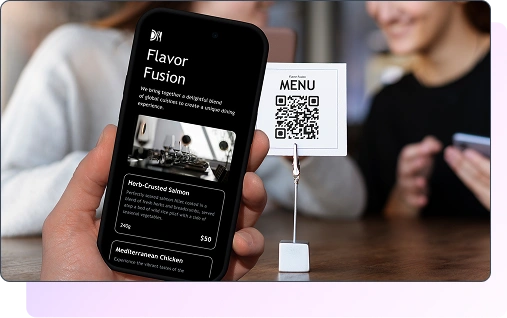
Hospitality & Food Service: Digital menu delivery, reservation systems, contactless ordering, special offer distribution.
Finance: Payment facilitation, account information access, service promotions, secure document handling.
Government: Form distribution, public notice systems, service access simplification.
Education: Resource sharing, assignment submission, attendance tracking, campus navigation.
Real Estate: Property details, virtual tour access, agent contact information, showing coordination.
Events & Entertainment: Ticket management, attendee check-in, session schedules, interactive experiences.
Nonprofits: Donation simplification, volunteer management, impact reporting, event promotion.
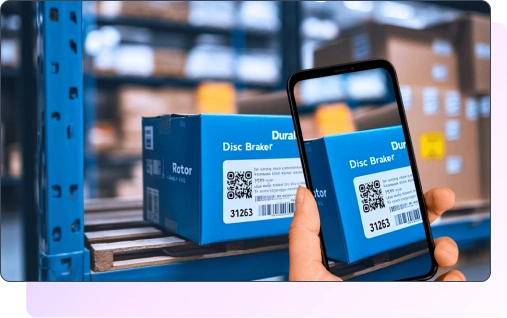
Logistics: Package tracking, inventory management, shipment verification.
Every industry finds ME-QR’s comprehensive type selection accommodates specialized requirements without forcing square pegs into round holes.
With 14 QR code types, Beaconstac covers fundamental business needs adequately. URL links, contact information, WiFi sharing, email addresses, phone numbers, and basic data formats address common applications.
However, when organizations require specialized types—social media integration, payment processing, file sharing, appointment scheduling, or industry-specific formats—Beaconstac’s limited selection provides insufficient options. Users must either accept generic URL-based workarounds or transition to qrcodemonkey.net for specialized code types.
For simple applications within Beaconstac’s type catalog, the platform works effectively. For industry-specific or specialized requirements, type limitations become apparent.
The architectural differences between these platforms create distinct workflow experiences.
Users work entirely within ME-QR’s interface from start to finish. Create codes, customize them, monitor performance, edit when needed, analyze data, collaborate with teams, and manage projects—all without leaving the platform. This unified experience reduces cognitive load, eliminates context switching, and accelerates familiarity with platform features.
New users navigate a single interface. Learning curves apply to features and capabilities, not to navigating between separate platforms. Data flows seamlessly between systems, enabling comprehensive analysis and coordination.
Users navigate between Beaconstac and qrcodemonkey.net when accessing certain functionalities. Codes created in Beaconstac redirect to qrcodemonkey.net for advanced operations. Users maintain separate accounts, learn two interfaces, and manage data across platform boundaries.
This experience introduces friction at specific operational points. Users attempting advanced operations unexpectedly encounter redirects. Learning multiple interfaces becomes necessary for comprehensive platform utilization. Data management becomes fragmented across systems.
Both platforms serve legitimate use cases within their operational parameters.
Basic static QR code generation when advanced features aren’t required. Small projects where simplicity outweighs comprehensive functionality. Organizations already embedded in qrcodemonkey.net ecosystems. Users comfortable navigating between platforms.
Complex, enterprise-level QR code campaigns requiring extensive customization and analytics. Organizations needing diverse QR code types across multiple business units. Teams requiring unified platform management and collaboration. Projects where dynamic editing, API integration, and comprehensive analytics provide strategic value. Growing businesses anticipating expanding QR code requirements.
Quality assistance and multilingual support become critical when workflows depend on platform reliability.
ME-QR provides resources in 28 languages, ensuring global users access help in their preferred language. This multilingual approach reduces confusion, accelerates problem resolution, and enables seamless international team collaboration.
Customer support infrastructure includes detailed documentation, responsive assistance channels, and comprehensive guidance for basic and advanced features. Users receive direct support from the platform team rather than depending on community resources alone.
Beaconstac offers customer support through standard channels. Language support remains more limited compared to ME-QR’s 28-language offering, potentially creating challenges for international teams or non-English-speaking users requiring assistance.
Modern businesses operate across multiple platforms. QR code generators that integrate seamlessly into existing workflows deliver far more value than isolated utilities.
ME-QR’s API-first approach enables integration with virtually any business system. Connect to e-commerce platforms, CRM systems, marketing automation tools, inventory software, ticketing platforms, or custom applications.
Google Analytics integration consolidates QR code data with broader marketing metrics, providing unified insights. Webhook support, bulk import/export capabilities, and flexible data formats ensure ME-QR adapts to existing workflows rather than demanding workflow restructuring.
Beaconstac provides integration with popular tools including Google Analytics, Zapier, and various CRM platforms. These integrations enable useful workflow connections for specific use cases.
However, when integrations or custom connections require advanced functionality, users may encounter qrcodemonkey.net redirection. This means comprehensive integration ecosystems may necessitate qrcodemonkey.net account setup alongside Beaconstac.
After comprehensive examination, several clear distinctions emerge between ME-QR and Beaconstac:
For organizations seeking comprehensive QR code management with extensive customization, diverse code types, sophisticated analytics, and unified workflows, ME-QR delivers. For users requiring only basic, fundamental QR code functionality, Beaconstac provides adequate capabilities without platform complexity.
ME-QR provides 46 QR code types within a unified platform, comprehensive dynamic code management, extensive customization, sophisticated analytics, and business-ready features including API access and bulk generation. All functionality operates within the ME-QR ecosystem without redirects. Beaconstac supports 14 QR code types and redirects certain advanced features to qrcodemonkey.net, fragmenting your workflow across multiple platforms.
Beaconstac handles static QR code creation directly. However, dynamic QR codes—the ability to edit codes after publication—require qrcodemonkey.net access. Additionally, advanced customization, comprehensive analytics, bulk operations, and specialized features route through qrcodemonkey.net integration, requiring separate account management. Essentially, any workflow beyond basic static code generation with minimal customization redirects users to qrcodemonkey.net
ME-QR supports unlimited free dynamic QR code creation directly within its platform. Beaconstac does not support dynamic QR code creation within its primary interface—dynamic codes require redirecting to qrcodemonkey.net and creating a separate account there. So while technically dynamic codes are available with Beaconstac, they’re not created within Beaconstac itself but rather through qrcodemonkey.net integration.
ME-QR includes API integration, bulk QR code generation, real-time scan notifications, custom landing pages, multi-user team access, and professionally designed templates. These features streamline workflows and enhance campaign effectiveness.
ME-QR supports 46 distinct QR code types across all pricing tiers, all accessible directly within ME-QR’s interface. Beaconstac supports 14 types within its primary interface, but many advanced operations and specialized functionality require qrcodemonkey.net redirection. This type limitation—combined with forced qrcodemonkey.net integration for dynamic codes—significantly restricts which industries and sophisticated use cases Beaconstac can effectively serve independently.
ME-QR’s versatility makes it valuable across virtually every sector: healthcare, finance, retail, education, hospitality, logistics, government, nonprofits, and more. The 46 available QR code types ensure specialized solutions for diverse industry requirements.
ME-QR provides extensive design flexibility including custom shapes, colors, frames, patterns, logo integration, and artistic designs. All customization tools maintain code scannability while enhancing visual appeal.
ME-QR’s unified ecosystem, extensive type support, dynamic code support, API integration, bulk generation capabilities, team management, and security features position it as the enterprise choice. Beaconstac cannot serve as a standalone enterprise platform—its reliance on qrcodemonkey.net redirection for dynamic codes, advanced customization, and comprehensive analytics makes it unsuitable for sophisticated enterprise applications. Enterprises would face constant platform fragmentation attempting to build workflows in Beaconstac.
ME-QR’s pricing ($9/month or $69/year for the Lite plan; $15/month or $99/year for Premium) reflects comprehensive functionality within a single platform. Beaconstac’s free tier appears more affordable, but accessing advanced features may require qrcodemonkey.net subscriptions, potentially increasing total costs. ME-QR’s all-inclusive pricing provides transparency.
Yes, ME-QR provides RESTful API access in paid plans, enabling programmatic QR code generation, automated management, and integration with business systems. Beaconstac offers basic API access, but advanced integrations may require qrcodemonkey.net.
Yes, you can recreate codes in ME-QR, though the process requires some setup time. ME-QR provides tools for importing and managing QR codes, making transition feasible for most implementations.